
Choosing the right winch for your ATV isn’t about picking the biggest number on the box. It’s about matching the winch to the kind of riding and recovery situations you actually face.
Most riders start with the same question: what size winch for an ATV? The answer will vary widely, depending on how the machine is used. A trail rider who occasionally pulls a stuck ATV needs something different than a setup that lifts a snow plow every winter.
The difference shows up quickly when you’re axle-deep in mud or trying to lift a 4-wheeler snow plow in freezing weather. A winch that’s too small struggles. One that’s oversized adds weight and cost without solving a real problem.
But winch capacity is only one piece of the puzzle. Mounting setup, recovery technique, and how the winch is actually used on the trail all affect how much pulling power you really need. Understanding how the full recovery setup works in real riding situations makes it much easier to determine the right winch size in the first place.
The quick sizing guide below gives most riders a clear starting point.
Jump To Contents
- Quick Answer: What Size Winch for an ATV?
- ATV Winch Size Chart (By ATV Weight & Use Case)
- How to Determine the Right ATV Winch Size?
- Choosing the Right Winch Size Based on How You Ride
- What Size Winch Do You Need for an ATV Snow Plow?
- Is Bigger Always Better? (2,500 vs 3,000 vs 3,500 lb)
- Common ATV Winch Sizing Mistakes to Avoid
- Final Recommendation: The Best Winch Size for Most ATV Riders
- Quick Walkthrough: Key Points to Remember
- FAQ: ATV Winch Size Questions
- Choosing the Right Winch Means Riding With Confidence
Quick Answer: What Size Winch for an ATV?
Most ATVs need a 2,000–3,500 lb winch, depending on riding style and ATV size.
But a 3,000 lb ATV winch is the most common choice because it handles:
- Trail recovery
- Mud riding
- Pulling a stuck ATV
- ATV snow plow lifting
- Light utility work
ATV Winch Size Chart
| ATV Engine Size | Typical ATV Weight | Recommended Winch |
|---|---|---|
| 250–400cc | 400–550 lb | 2,000 lb |
| 400–700cc | 550–750 lb | 2,500–3,000 lb |
| 700cc+ or utility work | 750–1,000 lb | 3,000–3,500 lb |
Quick rule:
Choose a winch rated at 1.5–2× your ATV’s working weight for reliable recovery in real riding conditions. (This rule is explained in detail later in the guide.)
Once you know the right capacity, choosing a reliable model becomes much easier. Our roundup of well-tested ATV winches for trail and mud riding highlights options riders trust in real conditions.
Read: Does right winch size matter when choosing ATV winch?
ATV Winch Size Chart (By ATV Weight & Use Case)
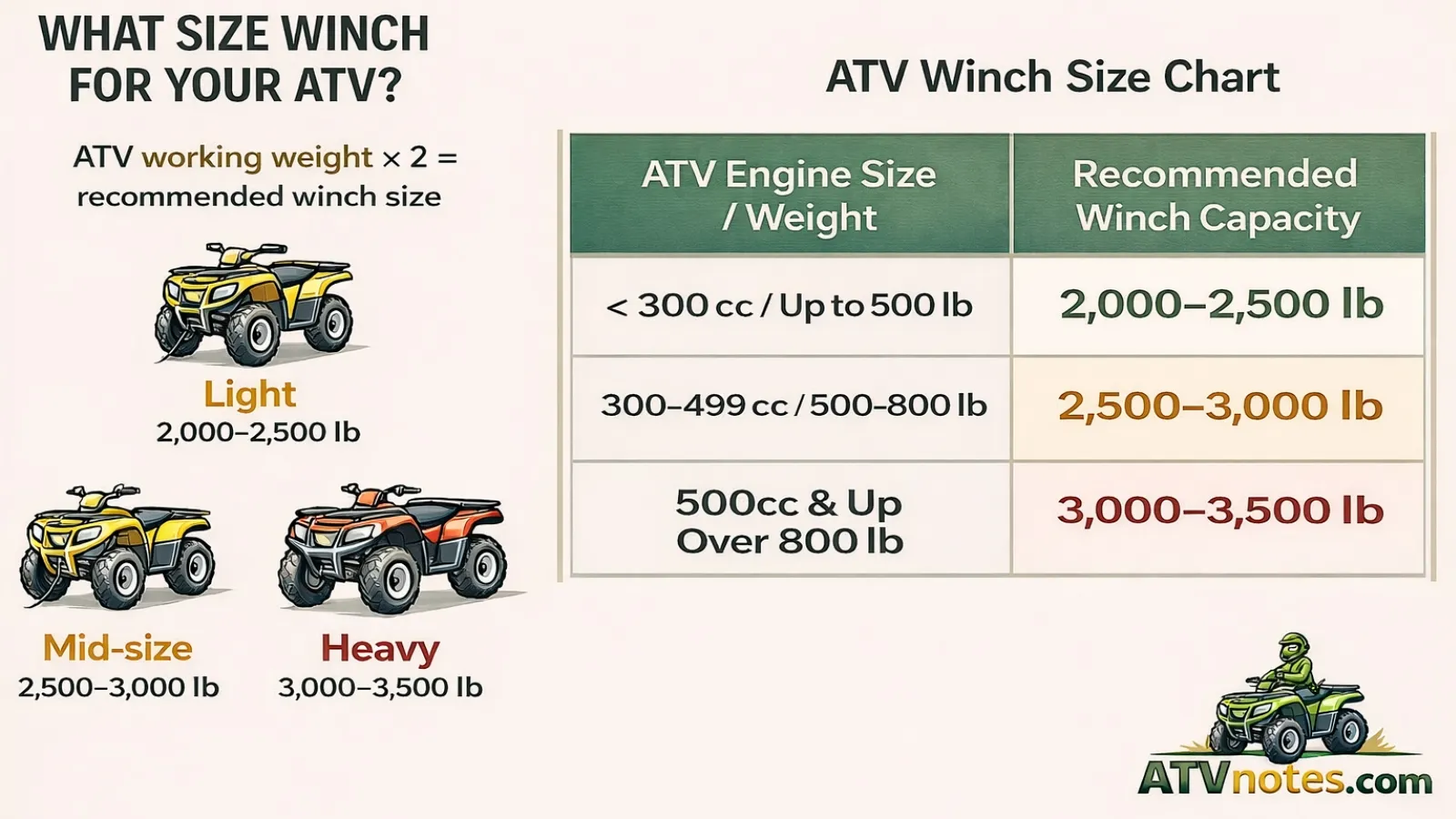
Once you understand the basic sizing rule, seeing it laid out visually makes the decision much easier. A clear ATV winch size chart helps match real-world riding needs with the right pulling power, without overthinking the numbers.
| ATV Engine Size / Typical Weight | Recommended Winch Capacity | Best Use Case |
| 400–500cc (Lightweight ATVs) | 2,000–2,500 lb | Trail riding, light mud, occasional self-recovery |
| 570–700cc (Mid-size ATVs) | 2,500–3,000 lb | Mixed trail and mud riding, utility work |
| 850–1000cc+ (Heavy ATVs) | 3,000–3,500 lb+ | Deep mud, steep terrain, snow plowing, heavy accessories |
- 400–500cc trail ATVs: These lighter machines usually don’t need huge winches. I’ve run a 2,000 lb winch on smaller ATVs for years, and it handled most trail recoveries just fine as long as conditions stayed moderate.
- 570–700cc mixed-use ATVs: This is where many riders land, and it’s also where winch size starts to matter more. From experience, stepping up to a 2,500 or 3,000 lb winch adds a noticeable margin of safety for mud, hills, and loaded racks.
- 850–1000cc and heavy-use ATVs: Larger ATVs with plows, tracks, or frequent mud use benefit from higher-capacity winches. The extra pulling power reduces strain and makes recoveries more controlled, especially in demanding conditions. A winch size ranging 3000-3500 lb answer for these mid-range to larger ATVs. Larger ATVs may need even higher capacity in demanding trail conditions but this is rare not standard ATV winch sizing. As for ideal UTV winch capacity, it starts from 3500ls pulling power.
At ATVNotes, we treat this ATV winch size guide as a starting point rather than a strict rule, because riding style plays just as big a role as weight. Also, do not forget when recoveries involve deeper mud or heavier loads, the winch draws significantly more power — which is why using the correct fuse size for an ATV winch is important for protecting the electrical system.
How to Determine the Right ATV Winch Size?
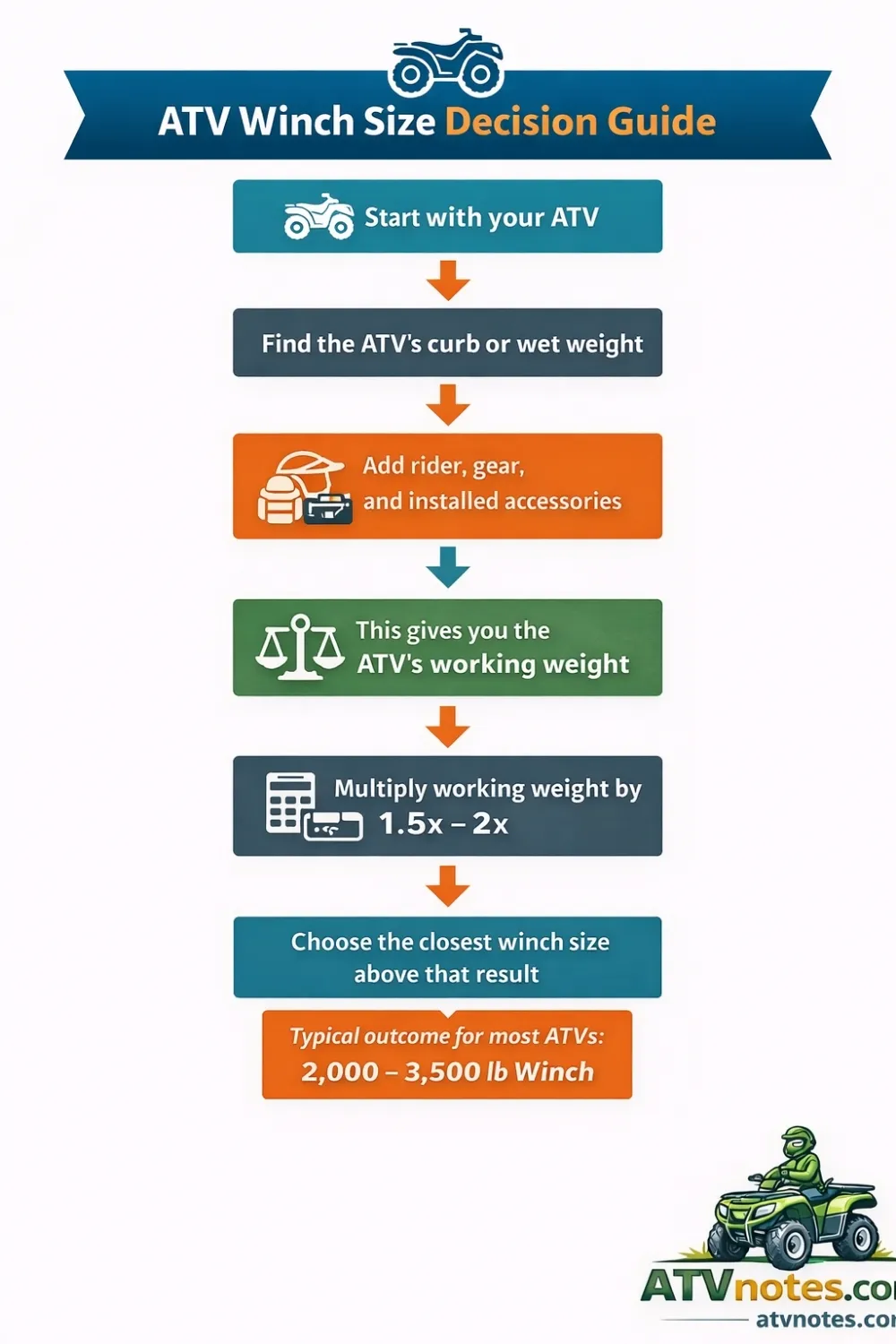
The simplest way to choose the right ATV winch size is to start with a practical rule:
Pick a winch rated at about 1.5× to 2× your ATV’s working weight.
That matters because a winch never pulls under perfect conditions. On the trail, it also has to overcome mud suction, slope resistance, packed snow, and the extra drag created by gear or accessories.
Start with working weight, not dry weight
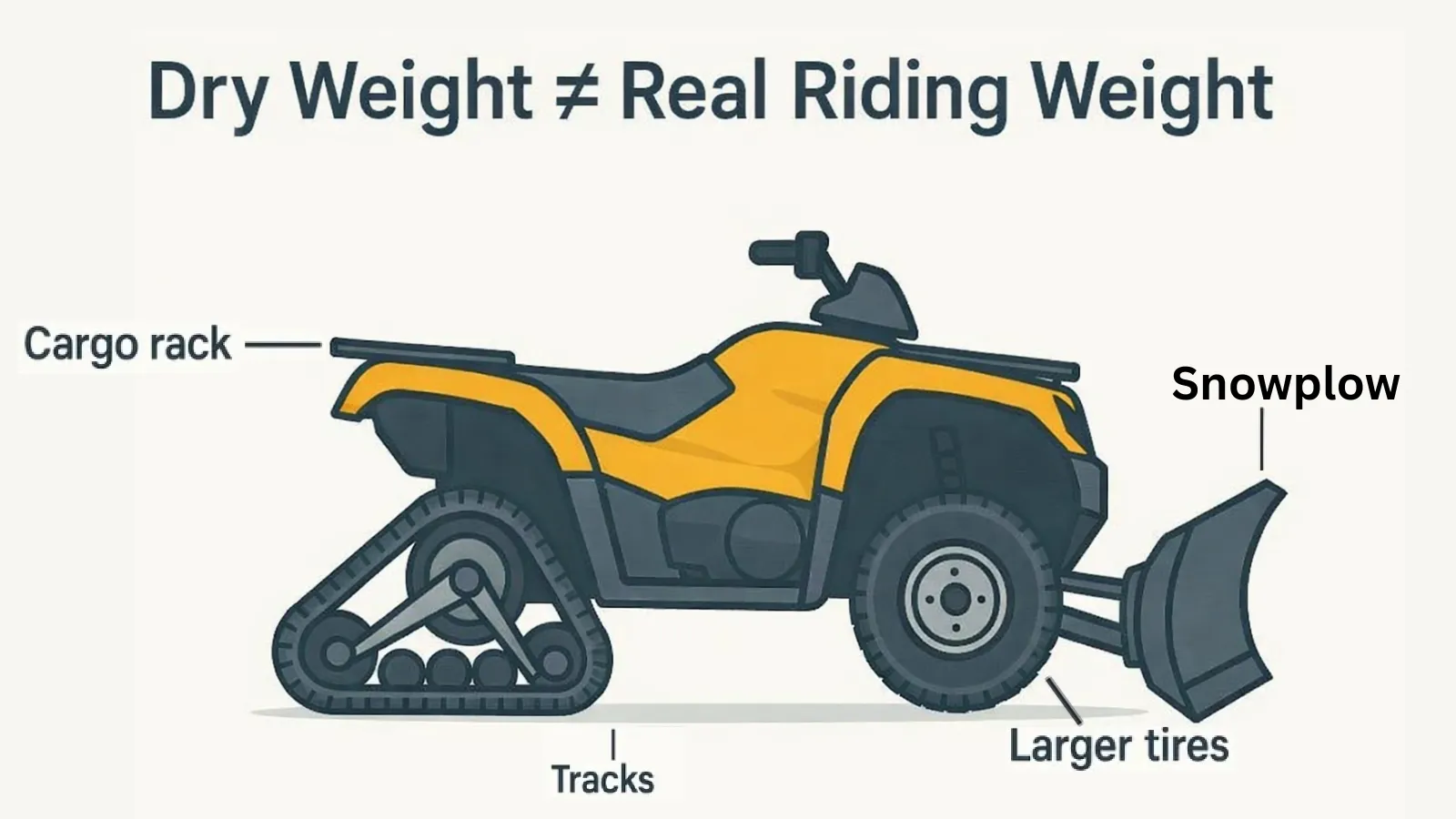
Dry weight only tells you what the ATV weighs from the factory without fluids, cargo, or mounted equipment. That number is useful on a spec sheet, but it is rarely the weight your winch has to deal with in real riding conditions.
A more useful number is your working weight — the ATV as it is actually used.
That usually includes:
- fuel and fluids
- tools or cargo on the racks
- front or rear bumpers
- skid plates or underbody protection
- larger tires
- winch mounts or plow mounts
- other mounted accessories
Many ATVs gain 100–300 lb once they are set up for regular trail use, utility work, or winter plowing.
Why the 1.5× to 2× rule works
Recovery loads are usually higher than the ATV’s actual weight. Even a moderate trail recovery can demand more pulling force than the machine weighs on its own.
That happens because the winch is not only moving the ATV. It is also fighting:
- deep mud around the tires
- packed snow or icy ground
- steep climbs or ditch recoveries
- rolling resistance from larger tires
- extra drag from accessories and loaded racks
That is why an ATV with a working weight of around 900 lb can still justify a 2,500–3,000 lb winch, depending on how and where it is used.
Read: Find the Best winches for mid-size ATVs
Example: sizing a mid-size ATV
Consider a mid-size ATV with a dry weight of about 650 lb.
After adding fuel, accessories, and normal riding gear, the working weight often reaches 850–1000 lb.
Applying the sizing rule suggests a winch around 1,500–2,000 lb, but most riders still step up to a 3,000 lb winch. That additional capacity provides a useful safety margin for difficult recoveries, heavy terrain, or lifting a plow blade.
Rider takeaway:
Start with the ATV’s working weight, then choose a winch that provides extra capacity for the terrain and riding conditions you expect to face.
Of course, numbers alone don’t tell the whole story, which is why riding style plays such a big role in choosing the right winch.
Choosing the Right Winch Size Based on How You Ride

Charts and sizing rules give a useful baseline, but how the ATV is actually used on the trail often matters just as much as its weight. Different riding styles place very different demands on a winch, especially when terrain and recovery situations come into play.
Trail Riding & Light Recovery
For riders who mostly stay on established trails and only use the winch occasionally, a 2,000–2,500 lb winch is usually sufficient. These machines typically stay closer to stock weight and encounter fewer extreme recovery situations.
Mud Riding & Water Crossings
Mud creates suction around the tires and increases resistance quickly. In these conditions, stepping up to a 2,500–3,500 lb winch provides more reliable pulling power and reduces strain on the motor during longer recoveries.
Hunting, Farm & Utility Work
ATVs used for hauling gear, pulling loads, or frequent recoveries benefit from higher-capacity winches. A 3,000–3,500 lb winch operates under less strain during repeated use and tends to last longer in daily utility work. Hunting and regular utility works demand higher capacity heavy-duty ATV winches built for tougher recovery work.
Matching winch capacity to how the ATV is used day to day helps ensure the winch runs comfortably below its limit, which is one of the most important factors for long-term reliability.
What Size Winch Do You Need for an ATV Snow Plow?
If your ATV is running a snow plow, the winch isn’t pulling the machine out of mud — it’s lifting the plow blade repeatedly while you clear snow. That changes how the winch is used and why capacity matters.
Most ATV snow plow setups work best with a 2,500-lb to 3,500-lb winch.
Here’s why that range works well:
- A 2,000-lb winch can lift lighter plow blades but may struggle with repeated lifting during long plowing sessions.
- A 2,500-lb winch handles most mid-size plow kits used on 400–600cc ATVs.
- A 3,000-lb or 3,500-lb winch gives extra lifting power and tends to last longer when the plow is raised and lowered dozens of times during a storm.
Many riders choose a 3,000-lb winch for plowing because it balances lifting strength, durability, and weight.

Do You Need a Winch for an ATV Snow Plow?
Most ATV plow systems use a winch to raise and lower the blade. Without a winch, the plow would need a manual lift system, which becomes tiring quickly when you’re clearing long driveways or multiple passes after heavy snowfall.
A winch lift system allows you to:
- raise the blade when turning or backing up
- adjust blade height while plowing
- lift the plow quickly when moving between passes
For riders who plow regularly, a winch isn’t just helpful — it’s the simplest and most reliable way to operate the plow.
Is Bigger Always Better? (2,500 vs 3,000 vs 3,500 lb)
It’s tempting to assume that buying the biggest winch available automatically solves every problem, but in real-world riding, that isn’t always true. After running different winch sizes on multiple ATVs, I’ve found that the best choice usually comes down to balance rather than maximum capacity.
- 2,500 lb winches: These are a solid fit for many mid-size ATVs used for trail riding, light mud, and occasional utility work. They’re lighter, typically cost less, and place less demand on the electrical system. The downside is that they can feel strained during deep mud recoveries or frequent plow use, especially on heavier machines.
- 3,000 lb winches: This size often hits the sweet spot. You get noticeably more pulling power without a big jump in weight or electrical draw. From my experience, a 3,000 lb winch handles mixed riding conditions with less stress and gives you confidence when terrain gets unpredictable.
- 3,500 lb winches: These are best suited for heavy ATVs, snow plows, tracks, or riders who spend a lot of time in deep mud. The added capacity reduces strain during hard pulls, but it also comes with more weight on the front end and a higher price tag, which isn’t always necessary for casual riders.
- When upgrading makes sense: If you’ve added a plow, larger tires, tracks, or frequently ride alone in challenging terrain, stepping up a size is usually worth it for reliability and longevity.
- When it’s unnecessary: For light trail riding with a mostly stock ATV, jumping to the largest winch often adds cost and weight without offering real benefits.
ATVNotes experts caution that unnecessary upsizing adds weight and electrical draw without meaningful benefit for casual riders, reinforcing the importance of choosing capacity based on real needs.
Understanding size differences helps, but avoiding a few common mistakes can make an even bigger impact on long-term reliability.
Read: Lear about common mistakes in UTV winching
Common ATV Winch Sizing Mistakes to Avoid
Many winch problems don’t come from poor equipment — they come from choosing the wrong size for how the ATV is actually used. Avoiding a few common mistakes can make the difference between a winch that works when you need it and one that constantly struggles.
- Using dry weight instead of working weight: Factory specs list the ATV’s dry weight, which excludes fuel, accessories, cargo, and installed equipment. Once the machine is set up for real riding, it often weighs significantly more. Sizing a winch based on dry weight can easily lead to choosing one that’s too small.
- Choosing winch size based only on engine size: Engine displacement doesn’t tell the whole story. Two ATVs with the same engine size can have very different weights depending on their design and accessories. Working weight and riding conditions are much better indicators of the winch capacity you actually need.
- Ignoring terrain resistance: Terrain often adds more resistance than the ATV’s weight itself. Deep mud, steep slopes, snow, and loose ground all increase the pulling force required during recovery. Riders who frequently encounter these conditions should usually step up to the next winch size.
- Buying too small for plow use: Snow plowing uses the winch differently than recovery. Instead of occasional pulls, the winch repeatedly lifts and lowers the blade during a plowing session. A slightly larger winch helps handle this repeated workload without excessive strain.
- Oversizing for a light trail ATV: A larger winch isn’t always better. Oversized units add unnecessary weight to the front of the ATV and place more demand on the electrical system. For machines used mainly on trails with moderate conditions, a properly sized mid-range winch is often the better choice.
Rider takeaway:
Most sizing mistakes happen when riders focus only on the ATV’s spec sheet. A better approach is to consider working weight, terrain conditions, and how the winch will actually be used.
Final Recommendation: The Best Winch Size for Most ATV Riders

While the exact winch size depends on ATV weight and riding conditions, most riders fall into a fairly predictable range.
- Trail riders with mostly stock ATVs: 2,000–2,500 lb winch
- Mixed trail and mud riders: 2,500–3,000 lb winch
- Snow plowing, heavy mud, or utility work: 3,000–3,500 lb winch
For many mid-size ATVs, a 3,000 lb winch ends up being the most balanced option. It provides enough pulling power for mud recoveries and plow lifting without adding unnecessary weight or electrical demand.
As made clear already in the riding style section, he best approach is always to choose a winch that matches how the ATV is actually used, rather than simply buying the largest model available.
Quick Walkthrough: Key Points to Remember
If you want a quick decision guide, keep these core principles in mind when choosing an ATV winch.
- Most ATVs use a 2,000–3,500 lb winch.
- Use the 1.5–2× rule: Size the winch based on your ATV’s working weight, not dry weight.
- Terrain affects pull load: Mud, hills, and snow often require stepping up one size.
- Accessories increase demand: Plows, racks, larger tires, and cargo add resistance.
- Leave a safety margin: Slightly higher capacity improves recovery reliability.
FAQ: ATV Winch Size Questions
Is a 2,500 lb winch enough for an ATV?
A 2,500 lb winch is enough for many mid-size ATVs used for trail riding and light mud. I’ve used this size successfully on stock machines without plows or tracks. However, frequent deep mud or heavy accessories may push its limits.
Do I need a bigger winch for plowing snow?
Yes, plowing snow usually requires a larger winch than trail riding. The winch is used repeatedly to lift and lower the blade, which puts continuous strain on the motor. Most plow setups work best with 3,000–3,500 lb winches.
How much does a winch add to ATV weight?
Most ATV winches add between 15 and 30 pounds, depending on size and rope type. Steel cable winches weigh more than those with synthetic rope. While the weight isn’t huge, it can affect steering and suspension on smaller ATVs.
Does winch size affect battery life?
Larger winches draw more power, especially under heavy loads. In real-world use, a properly sized winch is easier on the battery than an undersized one constantly working at its limit. Keeping electrical demand balanced helps avoid dead batteries on the trail.
Choosing the Right Winch Means Riding With Confidence
Selecting the right ATV winch size comes down to matching the winch to your machine’s working weight and the conditions you ride in most often. A properly sized winch runs smoother, handles recoveries more reliably, and puts less strain on the ATV’s electrical system. When the capacity matches real riding conditions, the winch becomes a dependable tool instead of something you only hope will work when you need it.
Continue exploring related topics:
- Check for reliable ATV winch mounts
- Top-quality ATV winch kits for installation ease
- Know why Electric winches are the craze

ATVNotes is an off-road resource focused on ATV and UTV winching, recovery systems, safety gear, tires, batteries, and essential off-road equipment. Content is produced by the ATVNotes Expert Team and written from the perspective of a practical off-road recovery advisor, emphasizing real-world performance, system compatibility, and safety-first practices across trail riding, utility use, and off-road exploration.