
Getting stuck is part of riding. What matters is how you get out of it.
If you’re looking for the best ATV winch kits or UTV winch kits for real off-road recovery, the difference isn’t just pulling power. It’s how well the entire setup works when recovery stops being simple.
A good winch kit is about recovery margin, install simplicity, and having something you can trust when the trail turns against you—deep mud, off-camber ground, a loaded rack, or no one nearby to help.
That is where most buying advice misses the mark. It treats winches like numbers on a box. But real recovery is messier than that, and a fitment and installation often make the difference between a clean setup and a frustrating one.
This guide focuses on the ATV and UTV winch kits that actually make sense off-road: kits that fit properly, include the right components, and hold up under real recovery conditions.
Because the real goal is not just buying a winch. It is getting yourself unstuck without turning a bad situation into a worse one.
Jump To Contents
- Quick Answer: What is ATV/UTV winch kit?
- How This Guide Was Built (What Actually Matters)
- Best ATV/UTV Winch Kits at a Glance
- How to Choose an ATV/UTV Winch Kit That Actually Works
- Start With Your Machine and Be Honest About How You Ride
- A Winch Kit Should Feel Complete
- Fitment Is Where Installs Go Right or Wrong
- Control Matters More Than People Expect
- Synthetic rope vs steel cable — what actually matters
- What most people get wrong
- One detail that matters
- Match the Kit to Reality (Not the Ideal Scenario)
- The Simple Way to Get It Right
- ATV vs UTV Winch Size Guide: What You Actually Need
- How Winch Ratings Actually Work (First Layer vs Real Pull)
- Winch Safety & Recovery Basics
- Budget vs Premium Winch Kits — Real Difference
- 7 Best ATV & UTV Winch Kits Reviewed (Real-World Picks)
- Warn AXON 4500-S — Best Premium All-Around Winch Kit
- Rough Country 4500 UTV Winch Kit — Best Value for Most Riders
- KFI SE45-R2 — Best No-Nonsense Trail Winch
- SuperATV Black Ops 6000 — Best for Heavy UTVs & Real Recovery
- X-BULL 5000 — Best Budget Power Pick
- Champion 5000-lb Wireless Winch Kit — Best for Solo Recovery
- OPENROAD 3500 — Best for Light ATVs & First-Time Setup
- ATV/UTV Winch Kits Compared — Specs That Actually Matter
- Which Winch Kit Should You Actually Buy?
- If you want the safest all-around choice
- If you want the best value (most riders land here)
- If you ride mud or have a heavier UTV
- If you want simple, no-nonsense reliability
- If you’re on a budget but still want real pulling power
- If you ride solo and want better control
- If you have a light ATV and just need a backup plan
- Still unsure?
- Final Verdict
- Quick Decision Grid — Pick Based on How You Ride
- FAQs — What Riders Usually Get Wrong
- Why does my winch feel weaker the more line is on the drum?
- How many wraps should I keep on the drum?
- How long can I winch before I need to stop?
- Do I need to keep the engine running while winching?
- Do I need a snatch block?
- Is a 3000 lb winch enough for an ATV?
- Is a 4500 lb winch enough for a UTV?
- Can you use a winch without a mounting plate?
- Which matters more: pull rating or kit completeness?
- What’s the safest way to anchor to a tree?
- ⚠️ Unexpected Truth
- Final Word
Quick Answer: What is ATV/UTV winch kit?
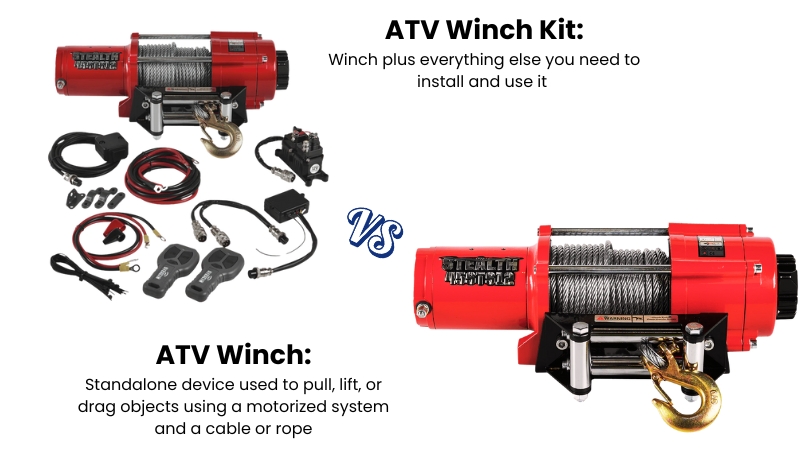
An ATV or UTV winch kit is a complete recovery setup that includes the winch, wiring, controls, and mounting components needed to install and use it on your machine. Unlike a standalone winch, a kit is designed to reduce the guesswork of fitment and installation.
How This Guide Was Built (What Actually Matters)
We didn’t rank these winch kits by spec sheets alone.
Rather, we prioritized the things that actually affect recovery once you’re stuck:
- how pulling power changes as the drum fills (first layer vs later layers)
- minimum wraps required to maintain safe load handling
- duty cycle limits and current draw under load
- kit completeness (mounting, wiring, controls)
- fitment and installation realism
- and basic recovery safety practices
In short, we focused on how these winches behave in real use—not just what the box says.
If you’re looking for the right ATV winch installation kit or a complete setup that actually fits your machine, this guide focuses on options that work without guesswork.
If you just want the best picks, skip ahead ↓
Best ATV/UTV Winch Kits at a Glance
If you just want the shortlist, start here.
These are the winch kits that make the most sense once you look past spec sheets and ask the real questions:
Will it fit? Does it include what you need? And will it actually pull when things get messy?
Best Overall (balanced power + reliability)
→ Warn AXON 4500-S
Clean install, strong integration, and controlled pulling.
Best for: riders who want to install once and never think about it again.
Best Value for Most Riders
→ Rough Country 4500 UTV Winch Kit
Solid pulling power, complete setup, and no unnecessary cost.
Best for: typical trail riders who want something that just works.
Best No-Nonsense Trail Option
→ KFI SE45-R2
Simple, durable, and consistent without extra features.
Best for: riders who value reliability over extras.
Best for Heavy UTV Recovery & Mud
→ SuperATV Black Ops 6000
More pulling margin and better performance under repeated load.
Best for: heavier machines, mud riders, and frequent recovery.
Best Budget Power Pick
→ X-BULL 5000
Strong capability for the price with useful features included.
Best for: budget builds that still need real pulling power.
Best for Solo Recovery
→ Champion 5000 Wireless Winch Kit
Wireless control makes positioning and recovery easier when riding alone.
Best for: solo riders who need better visibility and control.
Best for Light ATVs / First-Time Setup
→ OPENROAD 3500
Simple, lightweight, and easy to install.
Best for: smaller ATVs and occasional recovery use.
Not sure which one fits your setup yet?
→ Use the quick sizing guide below to narrow it down in under a minute
Dive in: Know how to reach the right winch you need
How to Choose an ATV/UTV Winch Kit That Actually Works
Most riders don’t buy the wrong size. They buy the wrong setup for the terrain, load, and recovery situations they actually face.
That’s where problems start.
Start With Your Machine and Be Honest About How You Ride
A light-trail ATV and a loaded UTV in mud are not the same situation.
But a lot of buying advice treats them as if they were.
- Light ATVs → smaller setups can work
- Most riders → the middle range (around 4500 lb) feels safer
- Heavy UTVs or frequent recovery → margin matters
Not because bigger is always better.
But recovery almost never happens under ideal conditions.
A Winch Kit Should Feel Complete
This is where many people get caught off guard.
A winch provides pulling power, but the kit determines how easily you can actually use it.
A good kit should come together without you having to chase parts halfway through the install.
Look for:
- mounting hardware (or a clear fitment path)
- wiring that doesn’t feel like an afterthought
- the right fairlead for your rope
- a sealed contactor or solenoid
- controls you’ll actually want to use
If you’re stopping mid-install to order extra parts, the kit wasn’t really complete. Our UTV winch installation guide will help you ensure proper wiring and mounting setup in your machine.
Fitment Is Where Installs Go Right or Wrong
“Universal fit” sounds good—until it doesn’t.
Mounting plates, bolt patterns, and bumper clearance are where installs either go smoothly or turn into improvisation.
A good kit won’t eliminate all effort—but it should:
- line up with your machine type
- reduce guesswork
- avoid last-minute workarounds
Fitment isn’t exciting—but it’s where most frustration comes from. If you’re installing your first setup, see our step-by-step ATV winch installation guide.
Control Matters More Than People Expect
Pulling power gets you out. And control is what keeps the recovery clean.
In real situations, you’re not just pulling—you’re:
- adjusting tension
- correcting angle
- sometimes working alone
Different setups change that experience:
- Wired → direct and predictable
- Wireless → flexible and better for solo recovery
- Handlebar switch → quick and intuitive
There’s no perfect option—just the one that fits how you actually ride. Knowing in-depth about the off-road winch (remote) control choice is crucial for successful ATV/UTV recovery.
If you already know you want a balanced, do-it-all setup:
→ Most riders are best off starting with a 4500 lb kit
Synthetic rope vs steel cable — what actually matters
For most off-road riders, synthetic rope is the better choice, but both options have trade-offs.
Synthetic rope
- lighter and easier to handle
- safer under tension (less recoil risk)
- easier to manage in mud, water, and cold
Steel cable
- more resistant to abrasion
- more traditional setup
- requires more careful handling
What most people get wrong
It’s not about which one is stronger.
Both work.
The real difference is how easy they are to use when recovery isn’t simple, and that’s why most riders prefer synthetic.
One detail that matters
Match the rope with the right fairlead:
- synthetic → hawse
- steel → roller
That small detail makes a bigger difference over time than most people expect.
If you’ve spent time in forums, you’ve seen riders argue about synthetic vs steel cable choice, but in real use, handling and safety matter more than brand-loyalty debates.
Match the Kit to Reality (Not the Ideal Scenario)
This is where most mistakes happen.
People buy for the ride they expect, not the situations that actually cause problems.
- Light trails → don’t overbuild
- Mud, load, uneven terrain → margin matters
- Frequent recovery → durability matters more than features
A winch doesn’t just pull your machine. Instead, it pulls everything working against it.
The Simple Way to Get It Right
If you want to keep it straightforward:
- Choose a size with some recovery margin
- Pick a kit that feels complete out of the box
- Make sure it fits your machine properly
- Don’t overpay for features you won’t use
Because when things go wrong, you’re not thinking about specs.
You’re thinking:
“Is this actually going to pull me out?”
ATV vs UTV Winch Size Guide: What You Actually Need
Winch ratings look simple. Recovery isn’t.
Those numbers are based on ideal conditions—flat ground, minimal resistance, and a full drum. Out on the trail, you’re dealing with mud, drag, uneven terrain, and added weight. That’s where the gap between rated capacity and real recovery load shows up.
To your utter surprise, two similar machines can face the same situation and get very different results. The difference usually comes down to how much reserve pulling capacity the winch still has once resistance builds.
Where smaller winches start to struggle
Winches don’t fail suddenly—they lose effectiveness gradually.
It starts when resistance builds:
- mud adds drag
- incline increases load
- rope builds on the drum
That’s where smaller setups begin to feel limited.
Dive in: Top 5 3500 lb ATV Winches to win over any off-road odds
3500 lb — Enough for Light Use
This range works for lighter ATVs to mid-size ATVs and occasional recovery.
If the machine still has some movement and the terrain isn’t working against you, a 3500 setup can handle short, controlled pulls. But once resistance builds, it runs out of headroom quickly.
It doesn’t fail often. It just reaches its limit sooner than expected. To find the winch size that matches your ATV and riding conditions and frequency, see our ATV winch sizing advice.
4500 lb — The Safe Middle Ground
This is where recovery starts to feel more controlled.
You get enough margin to handle uneven terrain, moderate mud, and situations where the machine isn’t cooperating easily. It won’t make recovery effortless, but it removes that constant feeling of being near the limit.
That’s why this range fits most riders—it balances capability without unnecessary bulk.
Dive in: Know your UTV winch size for hassle-free recovery
5000–6000 lb — For Heavy Loads and Real Recovery
This range is built for heavier UTVs, loaded setups, and repeated recovery.
As resistance builds, smaller winches begin to strain. A larger setup holds steady longer and makes recovery more predictable, rather than reactive.
The trade-offs are real: more weight, tighter fitment, and higher electrical demand. But when you need the extra capacity, those trade-offs matter less.
For heavier machines and repeated recovery situations, this capacity range firmly places it in the best UTV winch for heavy recovery.
4500 vs 6000 — What actually changes
The difference shows up when your machine is fully stuck—not when it’s rolling.
- 4500 lb → handles typical recovery
- 6000 lb → holds steady under heavier resistance
If your winch ever feels “almost enough,” you’re usually one size too small.
What Most Riders Get Wrong
A winch doesn’t just pull your machine.
It pulls everything working against it—terrain, angle, resistance, and whatever has already gone wrong.
That’s why sizing based solely on vehicle weight often falls short.
You’re not buying for the easy pull.
You’re buying for the one where nothing moves the first time you hit the switch.
A Simple Way to Get It Right
- Light ATV, occasional use → 3500 range
- Most riders → 4500 range
- Heavy UTV or tough terrain → 5000–6000 range
Most riders don’t regret going slightly bigger. They regret realizing they didn’t go big enough—right when they needed it.
How Winch Ratings Actually Work (First Layer vs Real Pull)
Winch ratings look simple—until you use one.
That “4500 lb” number only applies under ideal conditions:
- the first layer of rope on the drum
- full battery voltage
- minimal resistance
As more rope builds up on the drum, pulling power drops. Add mud, an incline, drag, or a fully settled machine, and the gap between the rated pull and the actual recovery widens quickly.
This isn’t just theory—it shows up in manufacturer data. On many mid-size winches in the 4500 lb range, full-rated pull applies only on the first layer, then drops noticeably on the second and third layers. Under load, the winch current draw can also climb into the top amp range, where battery capacity, wiring quality, and duty cycle start to matter.
That’s why a winch can look strong on paper but feel much less confident once the drum fills and resistance stacks up.
What most riders miss
A winch doesn’t fail the moment it’s undersized. It just runs out of margin sooner than expected.
That’s why experienced riders don’t size only for vehicle weight—they size for the pull that happens when nothing moves the first time you hit the switch.
Winch Safety & Recovery Basics
This is where things go wrong. Most recovery mistakes come from rushed setup, ignored basics, or poor rigging—not from a lack of pulling power.
These are the basics that prevent bigger problems.
Wraps matter
→ Most winches require at least ~5 wraps on the drum
Heat is the limiter
→ Short pulls + cool-down
If it’s too hot to touch, stop
Never hook back to the line
→ Always use a strap or sling
Keep the engine running
→ Helps prevent battery drain under load
Line direction matters
→ Rope should feed from the bottom of the drum
Use a damper or blanket
→ Always place something on the line during pulls
Budget vs Premium Winch Kits — Real Difference
This isn’t just about brand names.
Budget kits
- work well for occasional use
- heat up faster under load
- less refined controls and wiring
Premium kits
- smoother, more controlled pulling
- better electrical efficiency under load
- more consistent in repeated recovery
👉 Budget works. Premium removes frustration.
7 Best ATV & UTV Winch Kits Reviewed (Real-World Picks)
These are not just spec-sheet winners—they’re the kits that make sense once the trail turns into a recovery. Each one below earns its place based on how it performs when conditions aren’t ideal, and decisions matter. Pick the one that fits how—and how hard—you actually ride.
Warn AXON 4500-S — Best Premium All-Around Winch Kit
(Best for: riders who want a clean install + long-term reliability)
If you don’t want to think about your winch again after installing it, this is the one.
The AXON 4500-S feels like a complete system—not just a winch. The wiring, controls, and response are more integrated than in typical kits, making both installation and operation noticeably smoother.
Here’s what sets it apart on install day:
Most winch issues stem from poor wiring and connection points—not the motor itself. The AXON’s integrated contactor and digital control system reduces weak points and help maintain more consistent voltage under load.
Pros:
- Cleaner, more straightforward install than many kits
- Smooth, controlled pulling without jerky engagement
- Integrated control system improves consistency
- Synthetic rope is easier to handle during repeated use
Cons:
- Higher cost than most alternatives
- Overkill for light or occasional riders
Bottom line:
If you want a winch that installs cleanly and stays consistent under load, this is one of the easiest premium choices to recommend.
👉 Check current price and fitment for your machine
Rough Country 4500 UTV Winch Kit — Best Value for Most Riders
(Best for: weekend riders + first-time installers + budget-conscious setups)
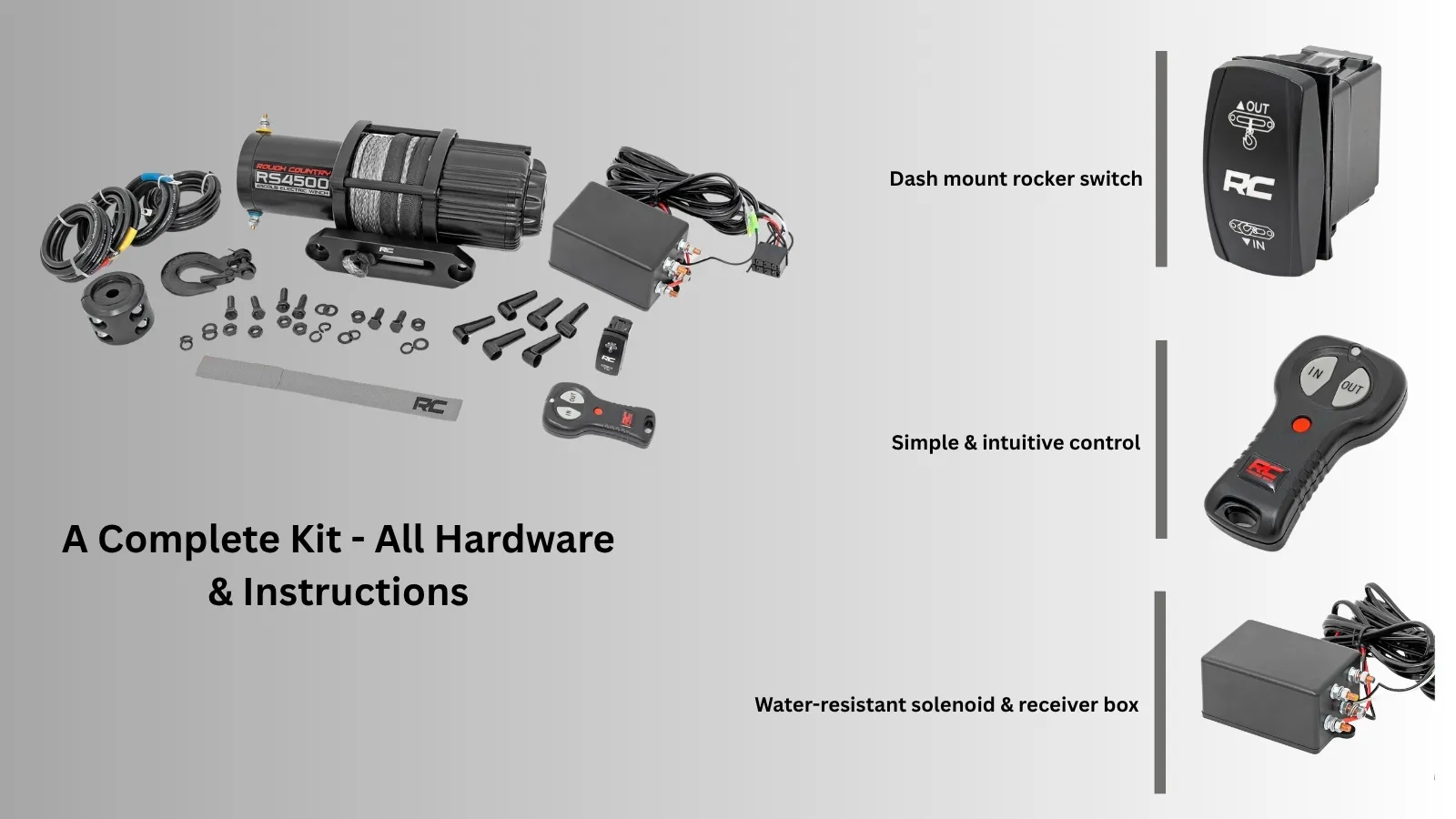
This is the one most riders should buy—it balances capability, completeness, and cost better than most options.
You get solid pulling power, a genuinely complete setup, and fewer surprises during install. It’s built to match how most people actually use their machines, not just how winches look on paper.
Where it stands out is kit completeness. Everything you need is included, so you won’t have to stop halfway through installation to track down missing parts.
Here’s what matters more than most people expect:
Many “winch kits” still cut corners on wiring or include components. Even if they work, poor wiring quality or layout can cause voltage drop and reduced performance under load. This kit avoids most of those issues by being more complete out of the box.
Pros:
- Truly complete kit (less guesswork, fewer extra purchases)
- Enough pulling power for real trail recovery
- Synthetic rope is easier to handle in mud and repeated pulls
- Controls are simple and intuitive under pressure
Cons:
- Fitment may still require some patience, depending on the machine
- Not as refined as premium systems
Bottom line: If you want something that works, installs without unnecessary friction, and doesn’t blow your budget, this is the safest pick for most riders.
👉 See why most riders end up choosing this one
KFI SE45-R2 — Best No-Nonsense Trail Winch
(Best for: riders who want reliability without extra features)
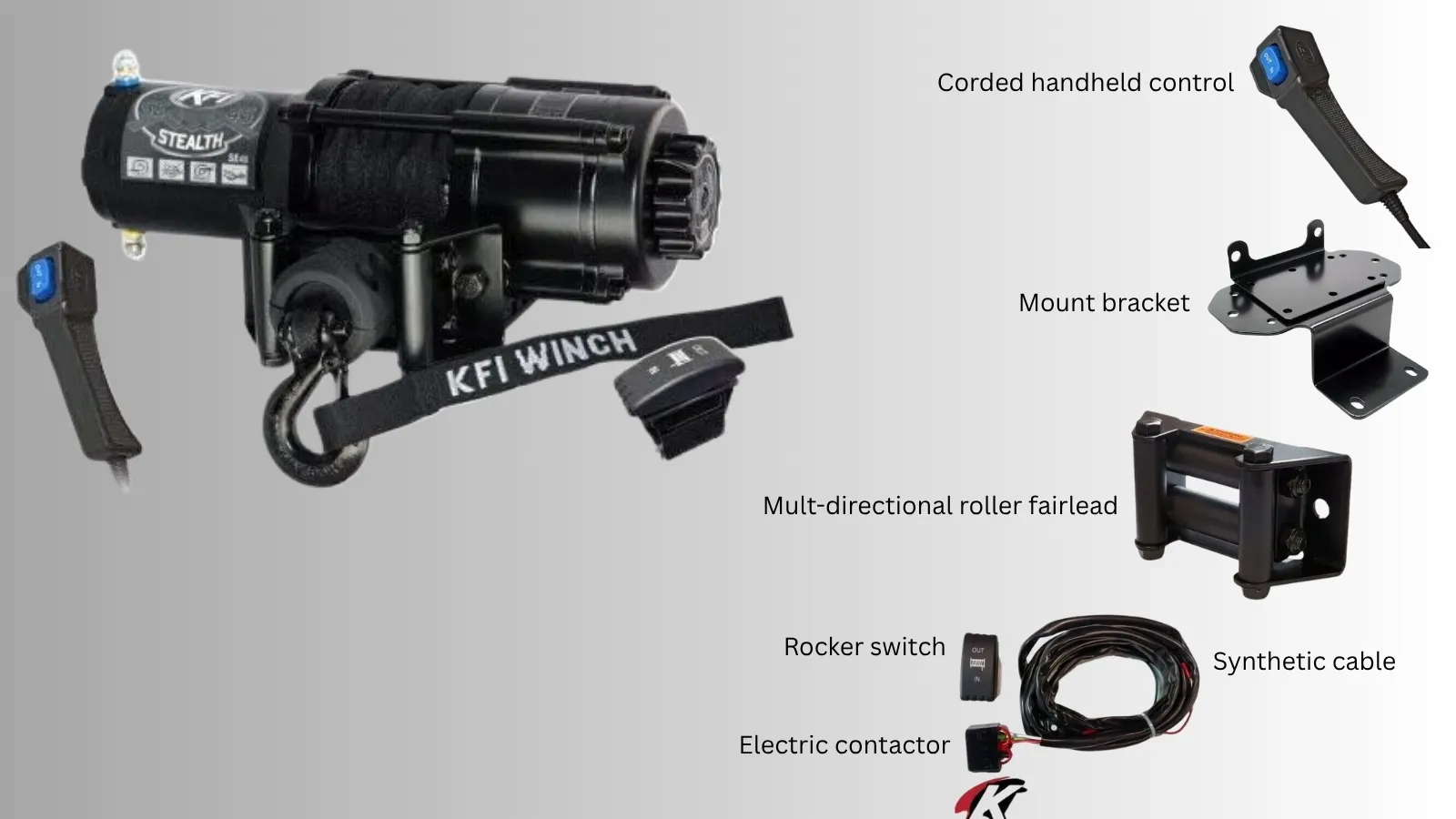
This is the winch you buy when you just want it to work—no extras, no overthinking, just consistent performance.
It’s not flashy, but it pulls predictably and holds up well under repeated use, which matters more than features once recovery becomes routine.
Where it stands out is transparency. KFI clearly publishes layer-based pulling capacity and current draw data, so you know what the winch can actually deliver under load—not just its rated number.
That kind of clarity is rare, and it makes this a more honest choice compared to many feature-heavy options.
Pros:
- Consistent, predictable pulling
- Simple controls that don’t get in the way
- Holds up well in mud and repeated use
- Transparent performance specs (rare in this category)
Cons:
- Not as smooth or refined as premium units
- Mounting may need to be matched to your machine
Bottom line: If you want something simple, durable, and predictable, this is a smarter pick than most feature-heavy alternatives.
👉 See if this fits your ATV or UTV setup
Dive in: Meet the Best Off-road winches for heavy-duty tasks
SuperATV Black Ops 6000 — Best for Heavy UTVs & Real Recovery
(Best for: mud riders + frequent recovery + work/utility users)
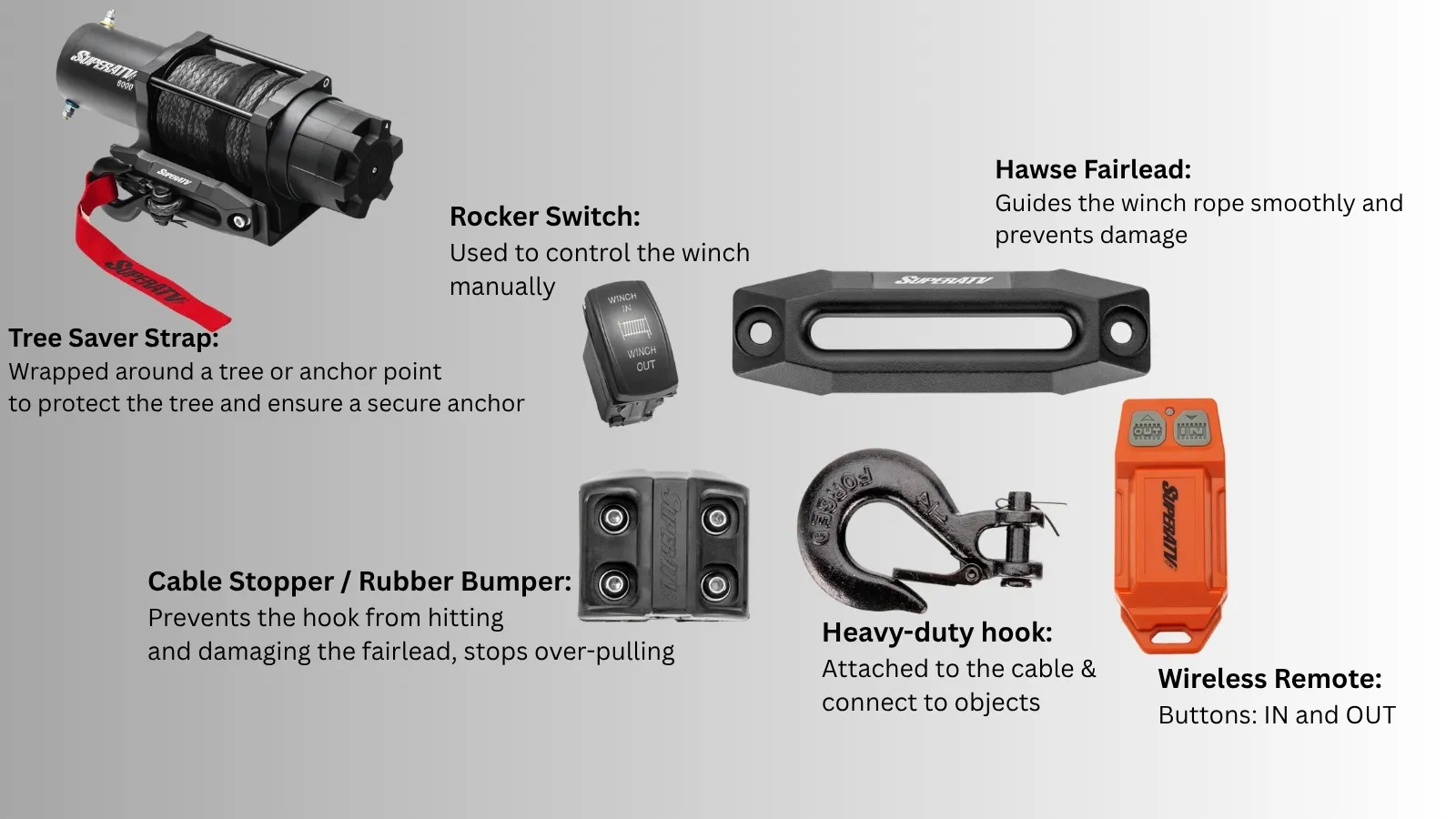
If your riding regularly turns into recovery, smaller winches start to feel limited—this is built for heavier machines and situations where resistance stacks up.
When mud, vehicle weight, and incline all work against you, this winch maintains more usable pulling capacity instead of feeling like it’s near its limit.
The advantage here is recovery margin under sustained load. Longer pulls generate heat quickly, and most winches aren’t designed to run continuously at high load. As resistance increases, current draw can climb into the 300–400+ amp range, where smaller units begin to slow down or overheat. A higher-capacity setup like this gives you more headroom before hitting those limits.
Pros:
- Strong, steady pulling under heavy load
- Better suited for repeated recovery, not just occasional use
- Complete kit works well for utility and work setups
- Synthetic rope handles repeated pulls better than steel
Cons:
- Overkill for lighter machines
- Adds weight and may require tighter fitment planning
Bottom line: If you regularly deal with deep mud or heavy resistance, this gives you the extra capacity that smaller winches struggle to maintain.
👉 Compare this against smaller winches for your setup
Dive in: What are the best budget UTV winches?
X-BULL 5000 — Best Budget Power Pick
(Best for: budget builds + casual riders who still want usable pulling power)
This is a budget winch—but one that still delivers usable pulling power for the price.
Where it works well is occasional recovery. You get solid capacity, useful features, and a complete setup for little cost, making it a practical choice for casual riders.
The trade-off shows under heavier or repeated loads. Performance drops faster than premium kits as heat builds and efficiency decreases, so it’s better suited to short pulls rather than sustained recovery.
Pros:
- Strong pulling power for the price
- Feature-rich for a budget setup
- Wireless control adds convenience
- Synthetic rope is easier to handle in rough conditions
Cons:
- Build quality isn’t as refined or durable as premium units
- Performance drops faster under heavy or repeated load
- Instructions and install experience can feel rough
Bottom line:
If you stay within its limits, this is a solid budget option. Push it like a premium winch, and the trade-offs become obvious.
👉 Check what you’re getting at this price
Champion 5000-lb Wireless Winch Kit — Best for Solo Recovery
(Best for: solo riders + safety-focused users + convenience-first setups)
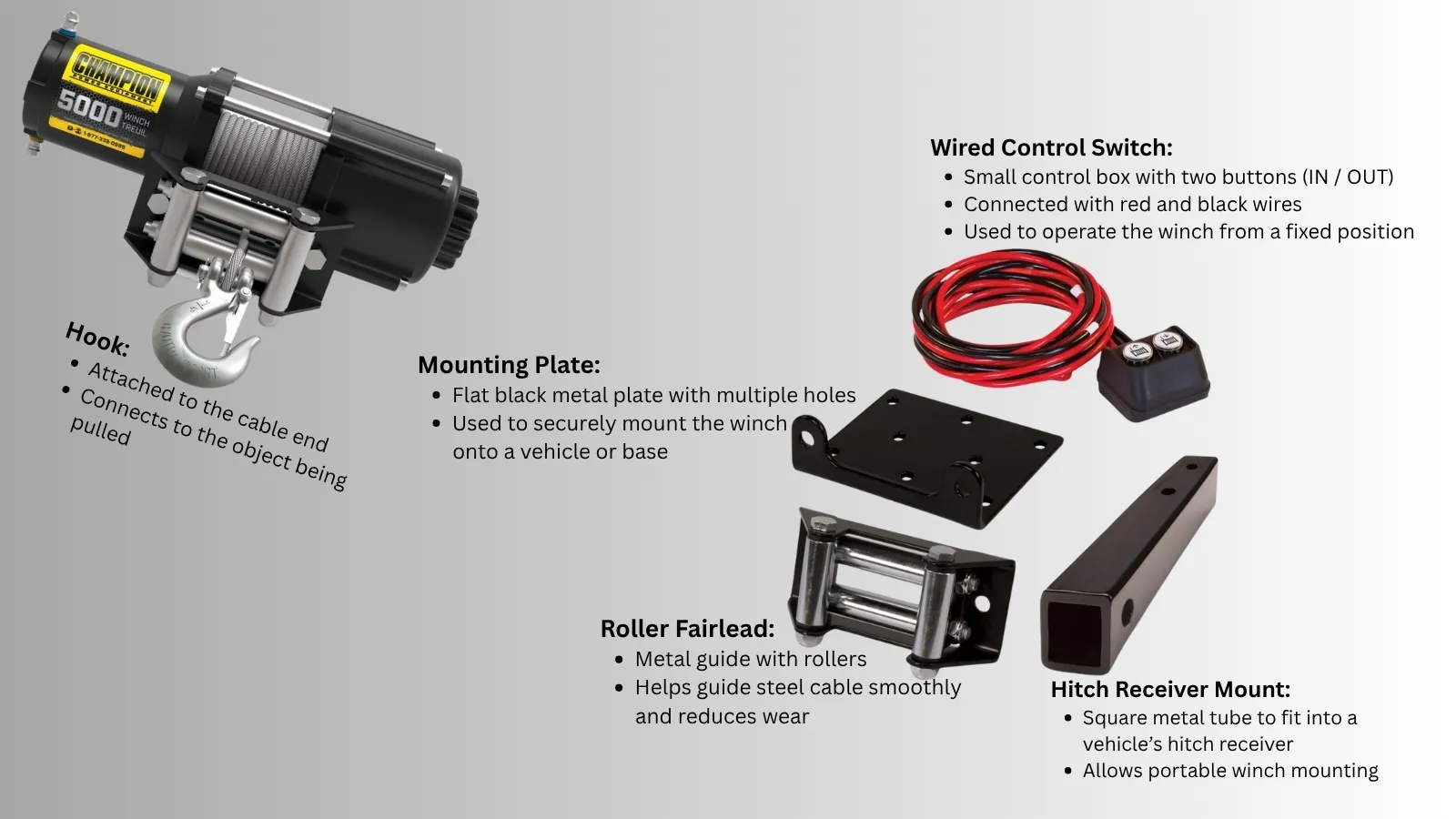
If you ride alone, this setup prioritizes control and visibility over raw pulling power.
The wireless remote lets you step off the machine and manage line angle, tension, and positioning more effectively—especially useful during angled pulls or when you need a better view of the recovery.
If you’re specifically looking for a wireless winch kit, this one stands out for combining that flexibility with a reliable backup wired remote.
One thing to be aware of:
Wireless controls typically have a slight delay compared to wired operation, especially under load. That’s normal—but it means applying tension gradually and staying aware of line movement is important.
Pros:
- Wireless control improves visibility and solo positioning
- Easier to manage angled pulls safely
- Backup wired remote adds reliability
- Smooth, manageable pulling for typical recovery
Cons:
- Wireless response isn’t as immediate as wired
- Steel cable requires more careful handling
- Not built for repeated heavy-duty recovery
Bottom line: If you ride solo, this setup improves control and visibility, making recovery easier and safer.
👉 See how the wireless setup works
OPENROAD 3500 — Best for Light ATVs & First-Time Setup
(Best for: light ATV riders + beginners + occasional recovery use)
If you’re running a smaller ATV and just want a simple, reliable backup, this is a practical entry-level option.
It’s lightweight, easy to install, and doesn’t turn your setup into a project—making it a good fit for first-time installs or occasional use.
Where it fits best is light recovery. It handles basic pulls well, but once resistance increases, it reaches its limits quickly.
Pros:
- Easy to install and beginner-friendly
- Lightweight—well suited for smaller machines
- Complete kit with straightforward setup
- Controls are simple and intuitive
Cons:
- Limited capacity in deeper mud or high resistance
- Not suited for repeated or heavy-duty recovery
- Less forgiving when conditions aren’t ideal
Bottom line:
If you ride light and just want a dependable safety net, this works well—just don’t expect it to handle more demanding recovery situations.
👉 See if this fits your ATV setup
ATV/UTV Winch Kits Compared — Specs That Actually Matter
Most buyers look at pulling capacity first—but real performance comes down to how that power holds under load, how much current it draws, and whether the kit is actually complete.
| Winch | Rated Pull (1st Layer) | Pull by Layer Info | Current Draw (Load) | Rope (Type / Length) | Controls | Mount Required | Key Notes |
| Warn AXON 4500-S | 4500 lb | Yes (manufacturer data available) | High under load (typical 200–300A+) | Synthetic (~50 ft) | Wired + Digital | Model-specific | Integrated system reduces wiring issues |
| Rough Country 4500 | 4500 lb | Not always published clearly | Moderate–high under load | Synthetic | Wired + Handheld | May require plate | Strong value, complete kit |
| KFI SE45-R2 | 4500 lb | Yes (clear layer drop shown) | Up to ~280A | Synthetic (38 feet)) | Wired + Handheld | Often required | Transparent specs, solid reliability |
| SuperATV Black Ops 6000 | 6000 lb | Not always published | Very high under load (300–400A+) | Synthetic | Wired + Handheld | Required | Built for heavy recovery |
| X-BULL 5000 | 5000 lb | Limited detail | High under load | Synthetic | Wired + Wireless | Included | Budget-focused, feature-heavy |
| Champion 5000 Wireless | 5000 lb | Limited detail | Moderate–high | Steel cable | Wired + Wireless | Included | Strong for solo control |
| OPENROAD 3500 | 3500 lb | Limited detail | Moderate | Synthetic | Wired + Wireless | Included | Light-duty setup |
Quick Reality Notes
Rated pull = first layer only
Pulling power drops as rope builds up on the drum
Current draw is real
Heavy pulls can push into hundreds of amps—battery and wiring matter
Installation quality matters as much as specs
A strong winch with poor wiring or mounting will underperform
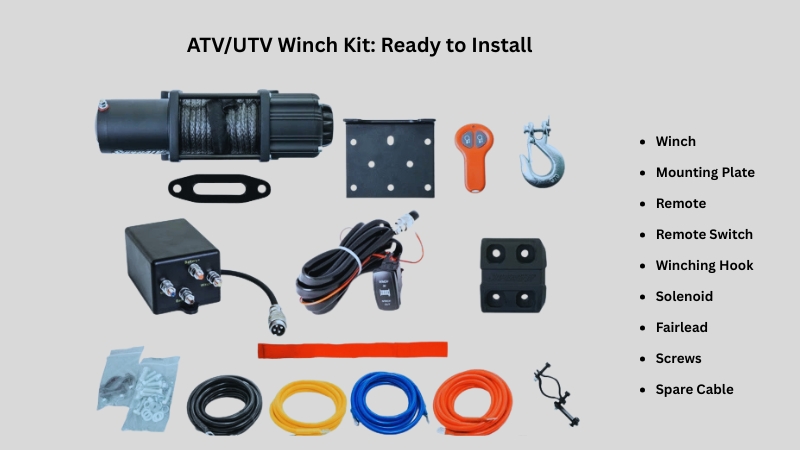
Figure: Comparison between a complete ATV winch kit (includes winch, wiring, controls, and accessories) and a standalone ATV winch (motorized unit with cable and hook only).
Which Winch Kit Should You Actually Buy?
By now, you’ve seen the options.
So instead of overthinking it, here’s the simplest way to choose based on how you actually ride.
If you want the safest all-around choice
👉 Go with: Warn AXON 4500-S
You want something that installs cleanly and works every time without second-guessing.
Pick this if: you’d rather pay once and not deal with issues later.
If you want the best value (most riders land here)
👉 Go with: Rough Country 4500
This is the practical choice—enough power, complete setup, and no unnecessary cost.
Pick this if: you want something reliable that just makes sense.
If you ride mud or have a heavier UTV
👉 Go with: SuperATV Black Ops 6000
This is where extra capacity starts to matter.
Pick this if: your current setup has ever felt “almost enough.”
If you want simple, no-nonsense reliability
👉 Go with: KFI SE45-R2
No extras. Just consistent performance.
Pick this if: you trust simple gear over feature-heavy setups.
If you’re on a budget but still want real pulling power
👉 Go with: X-BULL 5000
Strong capability for the price, with useful features included.
Pick this if: budget matters, but you still want real recovery capability.
If you ride solo and want better control
👉 Go with: Champion 5000 Wireless
This is less about power and more about control during recovery.
Pick this if: you ride alone and want better visibility and positioning.
If you have a light ATV and just need a backup plan
👉 Go with: OPENROAD 3500
Simple, lightweight, and easy to use.
Pick this if: you ride light and just want a reliable fallback.
Still unsure?
Don’t overcomplicate it:
- Most riders → Rough Country 4500
- Want premium → Warn AXON 4500-S
- Heavy machine/mud → SuperATV 6000
- Light use → OPENROAD 3500
That covers most real-world decisions.
Final Verdict
There’s no perfect winch kit—only the one that matches your machine, your terrain, and how often you actually need it.
Get that right, and everything else becomes simple.
Quick Decision Grid — Pick Based on How You Ride
Don’t want to compare specs? Use this instead. Find your riding style and go straight to the right pick.
| If this sounds like you… | Go with this | Why it fits |
| “I just want something that works every time. No install headaches.” | Warn AXON 4500-S | Clean install, integrated system, high reliability |
| “I want the best balance of price and performance.” | Rough Country 4500 | Complete kit, strong value, covers most real-world use |
| “I want simple, reliable gear without extra features.” | KFI SE45-R2 | Durable, predictable, no-nonsense performance |
| “I ride mud / heavy terrain and get stuck often.” | SuperATV Black Ops 6000 | More pulling margin, handles repeated heavy loads |
| “I’m on a budget but still need real pulling power.” | X-BULL 5000 | Strong capability for the price, feature-packed |
| “I ride alone and want better control and visibility.” | Champion 5000 Wireless | Wireless control improves positioning and safety |
| “I have a light ATV and just need a backup plan.” | OPENROAD 3500 | Lightweight, simple, beginner-friendly |
FAQs — What Riders Usually Get Wrong
Why does my winch feel weaker the more line is on the drum?
Because winches are rated at the first layer of rope on the drum, and pulling power decreases as more layers build up.
As rope increases:
- pulling force drops
- efficiency decreases
That’s normal and why choosing a winch with extra capacity matters.
How many wraps should I keep on the drum?
Most winches require at least 5 wraps on the drum (often more for synthetic rope).
These wraps:
- anchor the load securely
- prevent slippage under tension
Running fewer wraps increases the risk of failure.
How long can I winch before I need to stop?
Winches are intermittent-duty tools, not continuous-use motors.
Use:
- short pulls
- then allow a cool-down
If the motor becomes too hot to touch, stop and let it cool before continuing.
Do I need to keep the engine running while winching?
Yes.
Winching draws high current (often hundreds of amps), and running the engine helps:
- maintain battery voltage
- reduce battery drain
- prevent the vehicle from failing to restart
Do I need a snatch block?
Not always—but it’s highly useful in difficult recovery situations.
A snatch block helps:
- increase pulling power
- reduce strain on the winch
- improve control during angled pulls
If you ride in mud or near your winch’s limit, a snatch block ensures recovery success by reducing load and heat buildup.
Is a 3000 lb winch enough for an ATV?
Yes—for light ATVs and occasional recovery.
But it can struggle in tougher conditions.
Is a 4500 lb winch enough for a UTV?
Yes—for lighter UTVs and general trail use.
For heavier machines or mud riding, 5000–6000 lb is usually a better choice.
Can you use a winch without a mounting plate?
No.
A proper mounting plate or bumper is required to:
- handle load safely
- prevent damage to the machine
Which matters more: pull rating or kit completeness?
Both—and they work together.
Pull rating determines how much force you have.
Installation quality and wiring determine how reliably that force is delivered.
A higher-rated winch with poor wiring or mounting can underperform compared to a complete, properly installed setup.
What’s the safest way to anchor to a tree?
Use a tree strap or rated recovery sling.
Never:
- wrap the winch line directly around the tree
- hook the line back onto itself
This prevents rope damage and reduces failure risk.
⚠️ Unexpected Truth
Most winch failures aren’t mechanical.
They’re caused by:
- poor wiring
- weak connections
- bad mounting
- overheating from long pulls
That’s why installation quality and usage matter just as much as the winch itself.
Final Word
A winch is one of those things you don’t think about until you really need it.
And when that moment comes, nothing else matters except one question:
“Is this going to pull me out?”
If you’ve made it this far, you already know what to look for:
- enough margin for real recovery
- a setup that works reliably when you need it
- and a setup you can trust under load
The only thing left is choosing the one that matches how you actually ride—not what looks good on paper.
Because when you’re stuck, there’s no second try.
👉 Check your top pick, confirm fitment, and make sure it’s ready before you need it
Continue exploring related topics:
- Best stand-alone ATV winches in 2026
- UTV winch accessories for successful recovery
- Know how and where ATV & UTV winches differ

ATVNotes is an off-road resource focused on ATV and UTV winching, recovery systems, safety gear, tires, batteries, and essential off-road equipment. Content is produced by the ATVNotes Expert Team and written from the perspective of a practical off-road recovery advisor, emphasizing real-world performance, system compatibility, and safety-first practices across trail riding, utility use, and off-road exploration.